
Solothurn
Kapuzinerkloster
Building data
Denomination | Roman Catholic
Building type | Monastery
Year of construction | 1590 – 1593
Architect | Studer, Eugen (extension)
Town, canton | Solothurn, SO
Street address | Kapuzinerstrasse 16
GPS | 47.21131, 7.53285
Google Maps | Swisstopo
Reuse
Year of reuse | 2003
Ownership | Return
Building interventions | Unchanged
Form of use | Third-party use
Type of use | Miscellaneous
Brief information | Today, various events take place in the former monastery, ranging from storytelling evenings to courses and private functions.
Further information | see below
Status of information
Entry created | 2015/08
Entry last updated | 2024/02
⠀


Further information
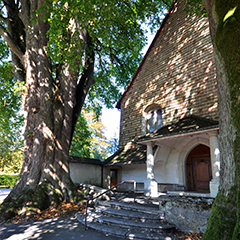
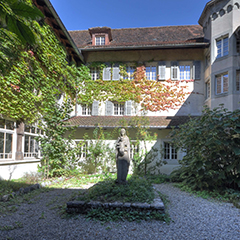
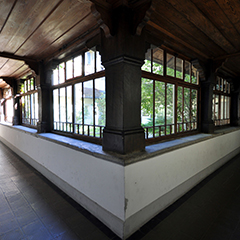
The Capuchin monastery in Solothurn was founded in 1588 and served for centuries as a study monastery where Swiss Capuchins received their theological training. After the last friar left the convent in 2003, the building remained unoccupied for a long period. The monastery belongs to the canton of Solothurn. In 2004, a project was drawn up, envisaging a religious meeting place as well as a centre dedicated to health, social services, education and culture, catering facilities in the refectory and the creation of housing suitable for the elderly. However, this project could not be realised. Negotiations with two potential investors also broke down, as they were unable to demonstrate that they were able to provide the necessary investment, estimated at between 30 and 40 million francs.
Since then, the premises have been hired out for various events and activities. The activities carried out at the convent are based on two principles: the integration of people with disabilities into work processes and the reduction of food waste through the processing of foodstuffs that do not meet market standards. The association ‘Kapuzinerkloster Solothurn’ supports the activities carried out in and around the monastery. A project currently under consideration (2023) involves using the site to house the central library and the State Archives. The canton hopes this will prevent the site from becoming the subject of speculation. The historic rooms could be converted into a library, whilst the lower part of the monastery garden would provide space for the State Archives, with archive rooms largely located underground. This would help to preserve the park, create a public space and safeguard the monastery.
Web links
Switzerland’s Architectural Heritage online
Helvetia Sacra
Kapuzinerkloster Solothurn