
Stans
Kapuzinerkloster
Building data
Denomination | Roman Catholic
Building type | Monastery
Year of construction | 1583 – 1585
Architect | not specified
Town, canton | Stans, NW
Street address | Mürgstrasse 18
GPS | 46.95543, 8.36919
Google Maps | Swisstopo
Reuse
Year of reuse | 2004/2020
Ownership | Return
Building interventions | Unchanged
Form of use | Shared use
Type of use | Miscellaneous
Brief information | Returned to the canton. Today, a centre of excellence for Alpine cuisine (monastery). The monastery church continues to be used by the ‘Association of the Capuchin Monastery of Stans’ for religious services.
Further information | see below
Status of information
Entry created | 2015/08
Entry last updated | 2024/02
⠀
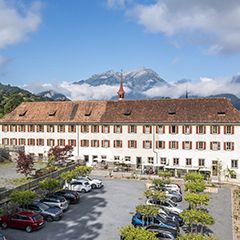
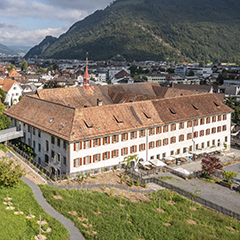
Further information
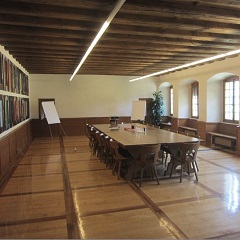
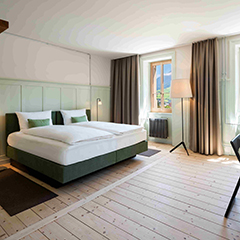
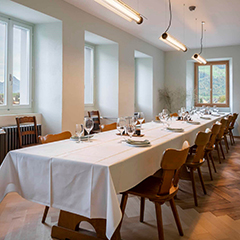
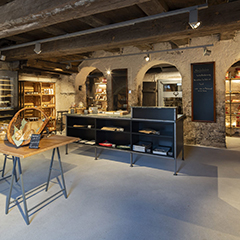
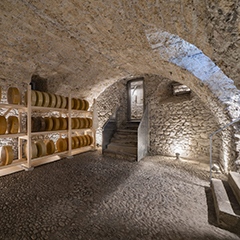
The convent has existed since 1684; it was extended in 1907. The building has been listed as a federal heritage site since 1992; furthermore, the cellar and the attic are of archaeological interest. In 2004, the canton of Nidwalden acquired the premises. Initially, there were plans to establish an ‘Academy of the Wise’ there, but this project did not come to fruition. In 2 008, the monastery was leased on a 60-year leasehold basis to the organic company Mondobiotech. The architect Sir Norman Foster was commissioned to draw up a renovation plan (which was never carried out). In 2014, the company, now known as Therametrics, left Stans. After buying back the building lease, the cantonal government transferred the monastery to the KEDA Foundation (Culinary Heritage of the Alps). Since August 2020, the foundation has been running the ‘Culinarium Alpinum’, complete with an inn and a restaurant. The Stans Capuchin Church Association (VKS) is responsible for running the church. It is committed to ensuring that the Capuchin Church retains its sacred purpose and maintains it through immense voluntary and financial dedication. In 2022, the ‘Edible Landscape’, which forms an integral part of the ‘Culinarium Alpinum’, was inaugurated. In collaboration with the Swiss Foundation for the Cultural, Historical and Genetic Diversity of Plants and Animals ‘ProSpecieRara’, that this unique world came into being, featuring around 250 different varieties of fruit and berries as well as an exceptional herb garden.